Research
Olivier Asselin/EGPAF
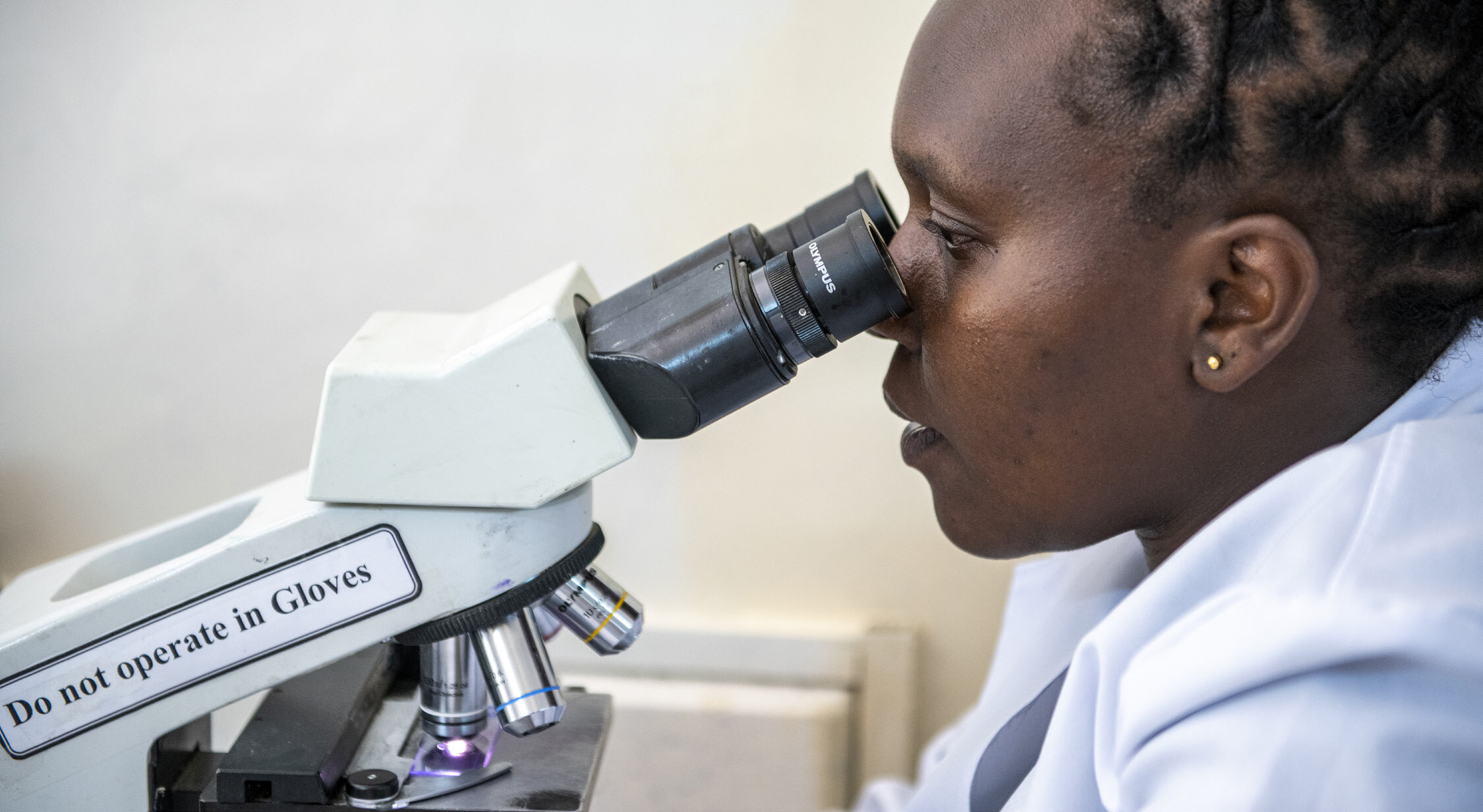
Elizabeth Glaser was one of the first public figures to advocate for research focused on the prevention and treatment of HIV and AIDS in children. Since Elizabeth’s initial efforts, EGPAF has continued to bring together leading international scientists to conduct basic, clinical, and operations research as part of our global efforts to eliminate pediatric AIDS.
Over the last quarter century, the international research community has achieved great progress in deepening its scientific understanding of pediatric HIV and AIDS, leading to the development of a variety of tools to address the epidemic among children. Most notably, research breakthroughs have led to significant reductions in rates of mother-to-child transmission of HIV in even the most resource-limited settings, while improvements in pediatric HIV treatments have ensured that children living with HIV can now enjoy long and healthy lives.
Research Focus
There are numerous pressing research issues that may hold the keys to uncovering new means of preventing mother-to-child transmission of HIV -- and to eliminating pediatric AIDS once and for all. Read more about our areas of focus.
Priorities for Future Research
EGPAF is constantly exploring new avenues for research into pediatric HIV and AIDS, and seeks to engage the world’s top researchers and practitioners in the quest to create a generation free of HIV. Read more about emerging research areas that our team is monitoring.
HIV/AIDS Organizations and Online Resources
- Basic research refers to any research done in a controlled laboratory setting using nonhuman subjects. The focus is on understanding cellular and molecular mechanisms that underlie a disease or disease process.
- Clinical research is research that either directly involves a particular person or group of people or uses materials from humans, such as their behavior or samples of their tissue, that can be linked to a particular living person.
- Operations research is a form of research that identifies and solves challenges in the implementation of health programs. The purpose of operations research is to increase the efficiency, effectiveness, and quality of health services, as well as the availability, accessibility, and acceptability of these services to people who need them.